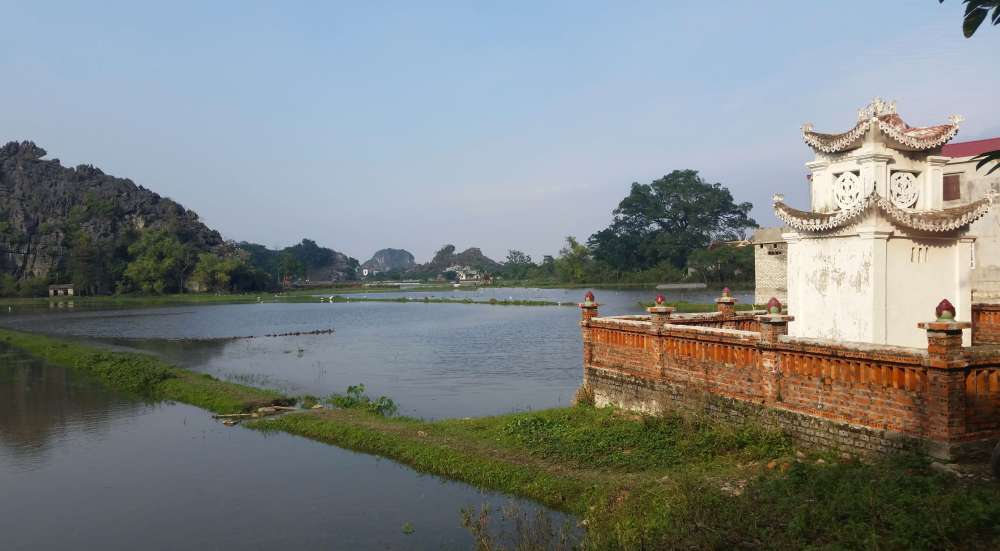
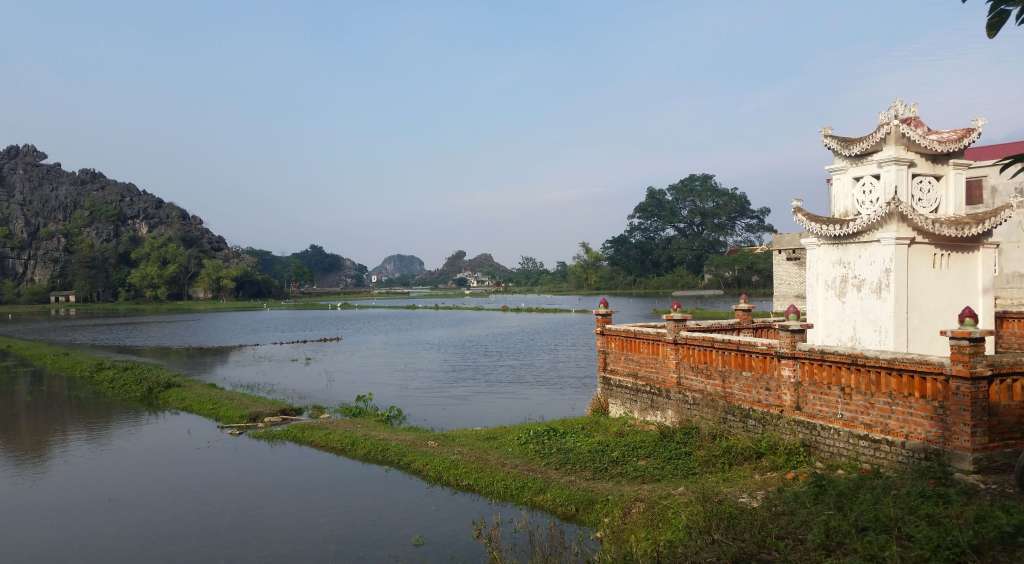
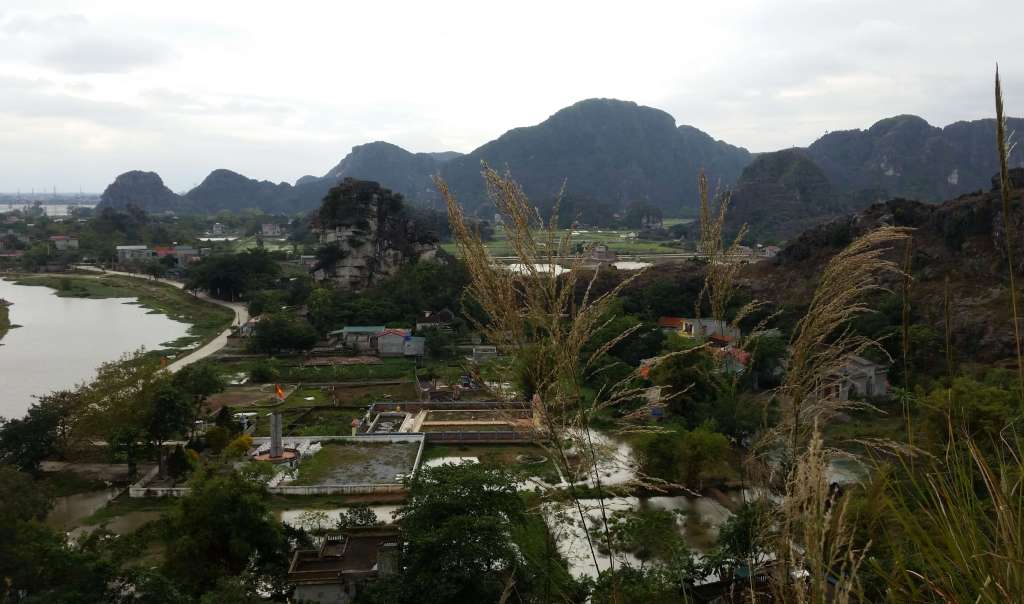
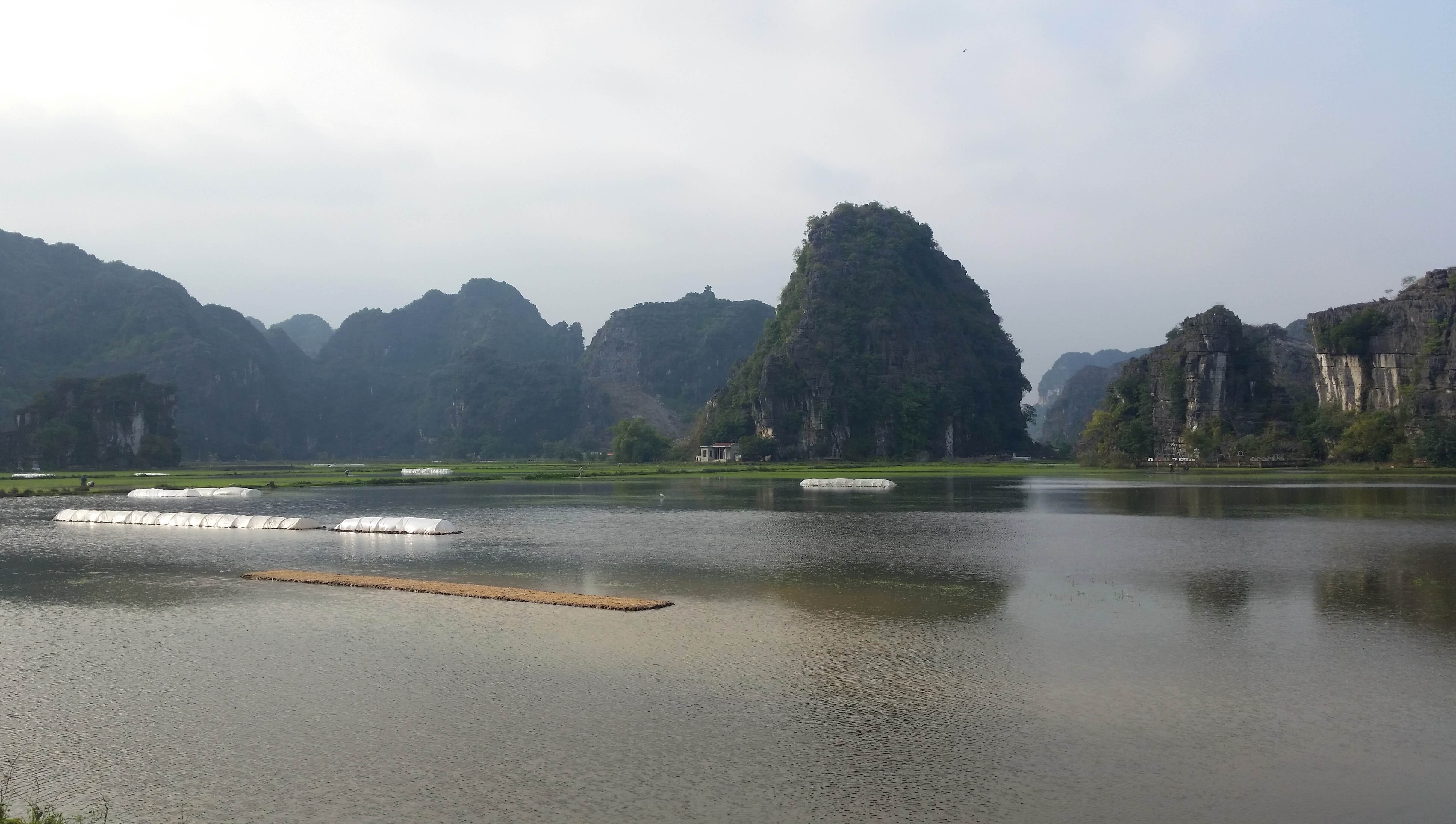
Breathtaking scenery of winding rivers, lush rice fields, and towering limestone karsts cloaked in greenery.
Ninh Binh is known as Halong Bay on land, and that’s exactly what it feels like. Instead of the sea and fishing villages, you’ll find winding rivers and lush rice fields, but the scenery is just as breathtaking. Towering limestone karsts, draped in greenery, rise dramatically from the water and land. Conveniently situated a couple of hours from Hanoi, Ninh Binh is an easy slice of countryside to explore.
Trang An: Discover Ninh Binh’s scenic waterways
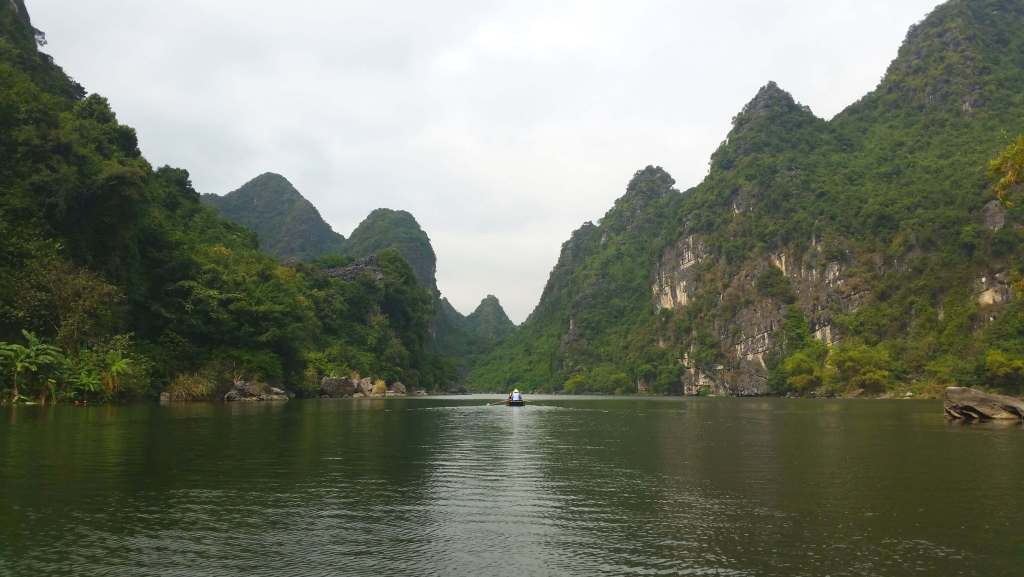
Trang An (pronounced Chahng-Ahn), is a stunning area of calm emerald waters, where temples and pagodas are tucked away behind dramatic limestone karsts. In 2014, it was designated a UNESCO World Heritage Site for its outstanding natural beauty and cultural significance.
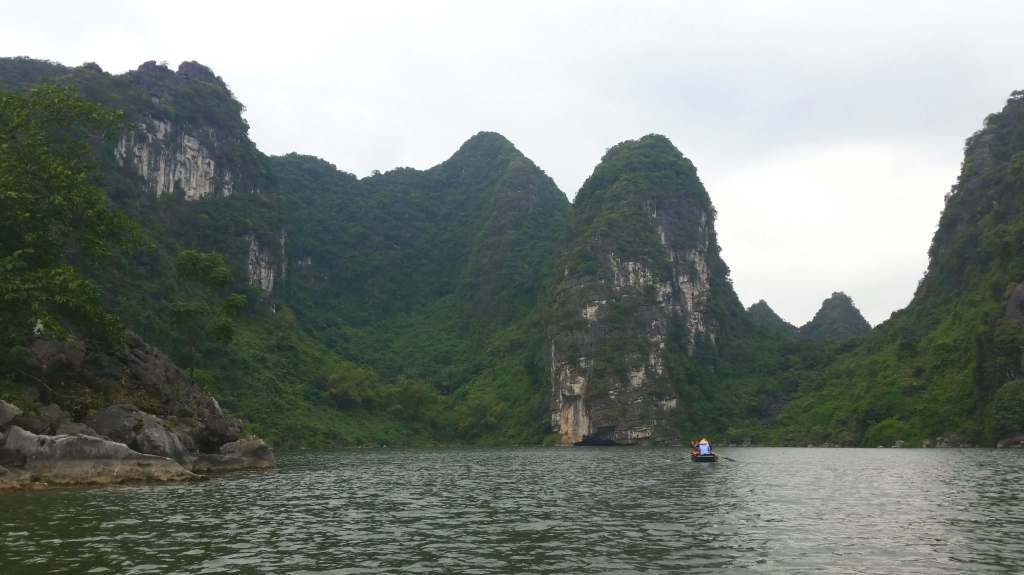
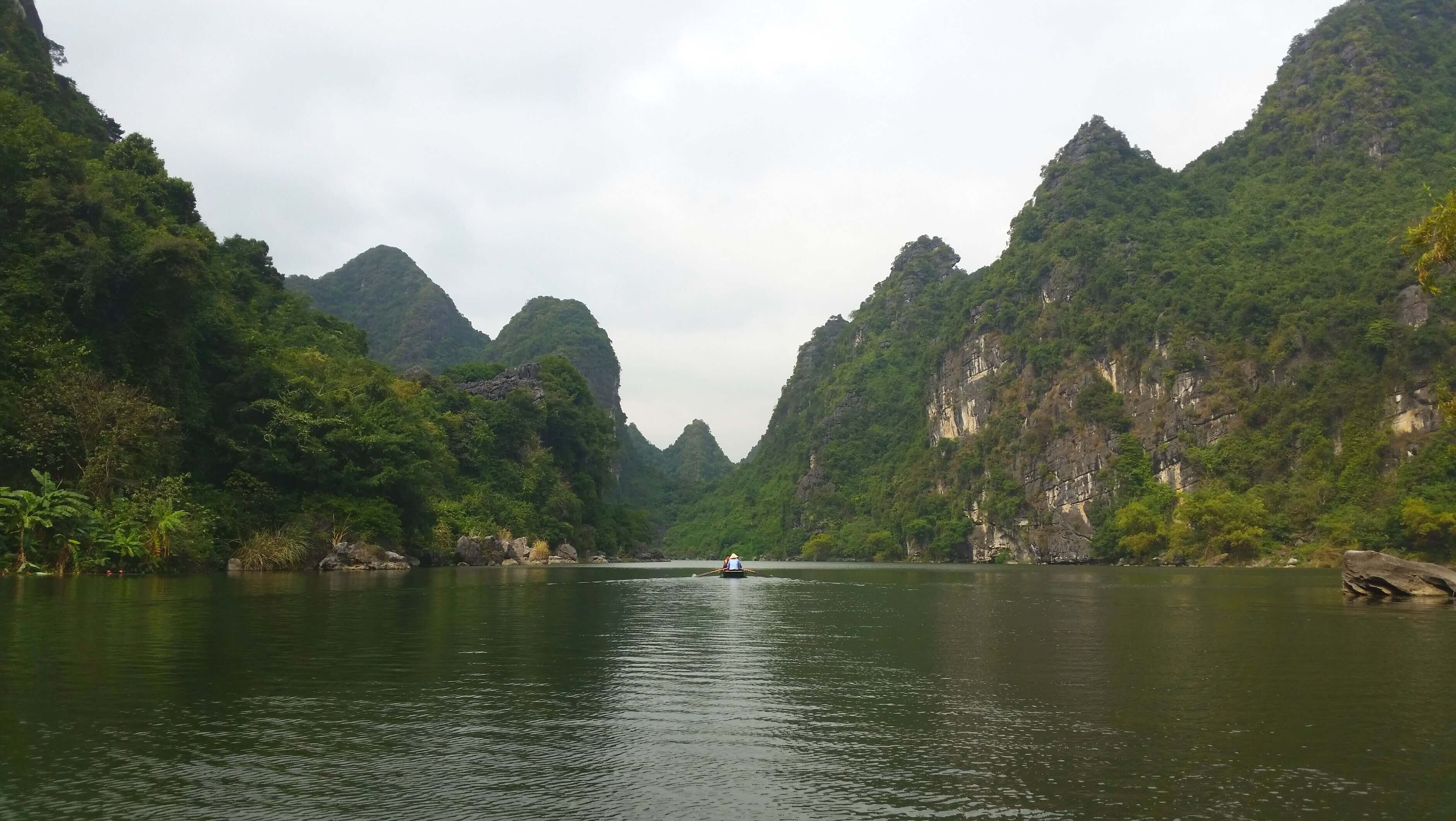
Like Halong Bay, Trang An is best explored by water. Boat tours glide along peaceful waterways, winding past limestone cliffs, caves, and hidden temples. At the docks, you’ll find hundreds of small wooden rowboats ready for visitors.
There are three routes to choose from, each offering a slightly different focus, but all taking you through scenic valleys and squeezing through caves. The rowers have remarkable control, never hitting the cave walls despite them being so narrow and always pointing out when you need to duck. Beyond the caves, the space opens to hidden coves where temples and pagodas are nestled on small islands. Your boat will stop and you’ll have time to explore. Walk up stone steps to fabulous views of towering limestone, glistening green waters and lush tropical plants.
Click here to read more about visiting Trang An
Open every day 7 am – 4 pm. Arrive early to avoid the crowds!
The boats accommodate four passengers and life jackets are mandatory. If your group has fewer than four people, you’ll need to wait for additional passengers or pay for the extra seats to have the boat to yourself.
Costs 250,000 VND per person or 1,000,000 VND if you want the boat to yourself.
While tips aren’t mandatory, I highly recommend showing appreciation for your hard-working rower. Hand a tip of 50,000–100,000 VND in cash directly to them at the end of your trip.
Stunning nature trails and panoramic viewpoints
Cuc Phuong National Park
Established in 1962, this is Vietnam’s oldest national park and a great destination for hiking and wildlife spotting. With hiking routes from 3 to 7 km, you can explore the botanical garden, stand beneath the thousand-year-old “Cho” tree, conquer Silver Cloud Peak at 648 meters, or discover prehistoric wonders in the Cave of Prehistoric Man. The park is teeming with wildlife – over 2,234 plant species, 122 reptiles and amphibians, and 135 mammals, including the elusive Clouded Leopard, Delacour’s Langur, Owston’s Civet, and Asian Black Bear. Birdwatchers can enjoy spotting the 336 recorded bird species soaring overhead.
For something truly adventurous, night-spotting tours reveal the park’s secret nocturnal residents: Black Giant Squirrels, Indian Flying Squirrels, Samba Deer, Loris, and a host of small carnivores. And if you’re lucky enough to visit in April or May, you may even be treated to a breathtaking spectacle of thousands of butterflies filling the forest.
The park is located about 1.5 hours drive from Ninh Binh. You can book tours or visit independently. Entrance fee costs 60,000 VND
Van Long Wetland Nature Reserve
A protected inland wetland home to incredible biodiversity among its limestone peaks and marshes. Unlike the busier boat tours at Trang An and Tam Coc, Van Long offers a quieter, more intimate experience. Keep an eye out for nine mammal species, including the rare and endangered Delacour’s langur, Tibetan bears, chamois, stump-tailed macaques, and even clouded leopards. Over 50 bird species also inhabit this lush habitat, offering fantastic opportunities for birdwatching.
You can explore independently or book a guided tour to learn more about the flora, fauna, and the conservation efforts that protect this remarkable ecosystem. It’s worth combining your visit with Cuc Phuong National Park for a full day of hiking and wildlife spotting.
The ideal time to visit is during the golden hour from 3:30 – 4:30 pm. Flocks of birds can be seen foraging and returning to their nests. If you’re lucky, you may also spot Delacour’s langurs feeding among the limestone cliffs. Costs 20,000 VND per person landscape ticket. Boat tours cost 120,000 VND per boat for two passengers.
Hang Mua (Mua Cave)
Since the 1200s, this natural vantage point was used to survey the area and track enemies. Today, it remains one of the best spots to take in panoramic views of the Tam Coc Valley and surrounding landscape.
Open daily from 6 am – 7 pm. You need to arrive early as this is another popular spot.
Costs 100,000 VND per person entrance fee.
Parking costs 10,000 VND for motorbikes and 5,000 VND for bicycles. Always park after entering the gate, just behind the payment booth. Ignore anyone insisting you park before the gate, this is a common scam.
Historical sites to explore
Hoa Lu Ancient Capital
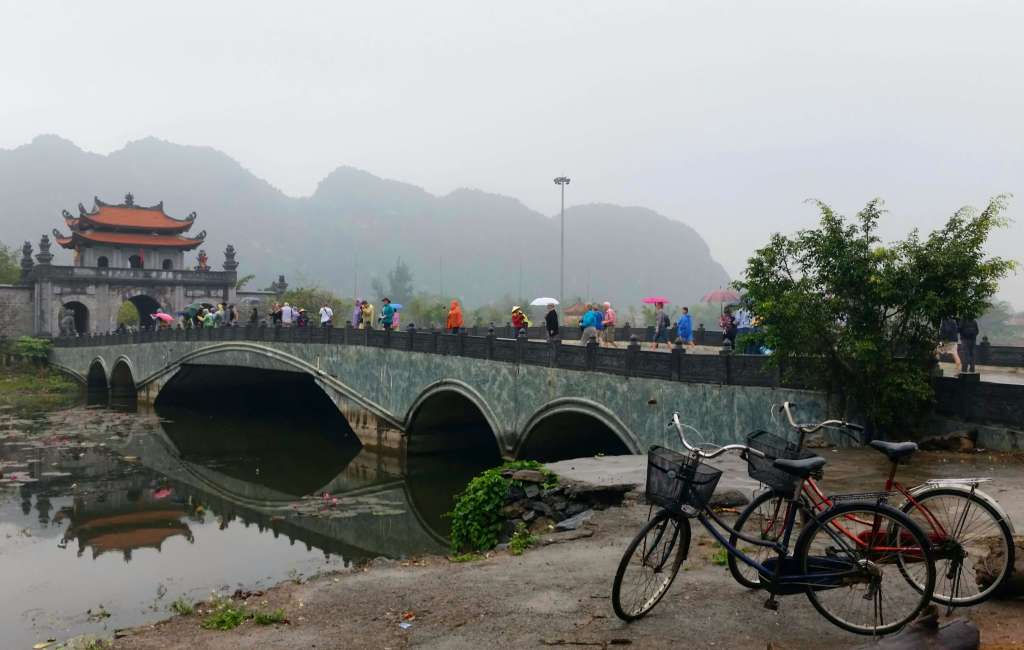
Built around 968 AD by King Dinh Bo of the ancient Vietnamese Kingdom of Dai Co Viet, Hoa Lu served as the country’s first capital. The city was strategically protected from invasions by a surrounding citadel and the nearby limestone hills. Today, it is part of the UNESCO-listed Trang An Complex. While much of the original capital has not survived, notable sites include Dinh Tien Hoang and Le Hoan Temples, Bao Thien Tue Palace, and the One Pillar Pagoda (Nhat Tru Pagoda).
Bich Dong Pagoda
A temple complex originally built in the 1400s and later expanded in 1705 by two Buddhist monks. The site features three pagodas constructed in traditional stone and wood styles, with some partially or entirely built into caves. You’ll climb through the cave passages to reach each temple. At the top, a rear exit opens to breathtaking views of a hidden valley.
Bai Dinh Pagoda
Vietnam’s largest Buddhist temple complex. The sprawling site includes both the newly renovated temple and the original old temple, along with a towering 100-meter stupa. Exploring the grounds can take hours, so wear comfortable walking shoes!
When to visit
Nov – April
Dry season offering cooler temperatures making this the best time for hiking and cycling
May – June
Rain fall starts to creep up. In late May to early June the rice fields turn golden making for some stunning for photography opportunities.
July – August
Hot and humid, with heavier rain but this is also the green season when the rice fields will be beautifully lush and lotus lilies will be in bloom.
Sept–Oct
Harvest season again, with lush green paddies before they turn golden.
Where to stay
A lot of people only include Ninh Binh as a quick day trip from Hanoi. This is a shame as this is such a beautiful area – and it takes a couple of hours to get here so you’re essentially spending 4 hours in the car. If you have time, staying two or three nights allows you to really enjoy in the scenery and explore at a relaxed pace.
Ninh Binh town
The town itself isn’t the most convenient base for sightseeing, as it’s not close to the main attractions.
Tam Coc
One of the most popular areas to stay, especially for budget travellers. You’ll find plenty of guesthouses, hostels, and mid-range hotels, alongside a range of restaurants and local services. The advantage of staying here is its central location, making it easy to explore nearby attractions. Tam Coc is known for its river boat trips winding through limestone karsts and rice paddies. I’ve always been told the experience isn’t as peaceful as Trang An, as you may get people aggressively trying to sell you stuff, so I’ve not done this personally.
Trang An
For a quieter atmosphere, surrounded by natural beauty, consider staying near Trang An. Since it’s farther from restaurants and other amenities, you may need to rely on taxis, Grab, or organised tours for getting around and dining.
How to get to Ninh Binh
Arriving by air
The nearest airport is Noi Bai International Airport in Hanoi. From there, you have several options to reach the city.
Bus or small van
The quickest and most affordable option is to take the bus with several daily buses and tour vans departing from central Hanoi.
Private transfers
If you want the quickest option and price isn’t an issue, opt for a private car.
Train
Trains to Ninh Binh leave multiple times daily from Hanoi Railway Station. The journey takes just over two hours, offering scenic views of the countryside along the way. Tickets can be booked in advance online or at the station.
How to get around
Bike
Cycling is a lovely way to explore the peaceful countryside. Bike rentals are widely available, and you can easily access temples, caves, and scenic spots at your own pace. Some sites are a bit further out so you’ll need to consider other transportation options.
Motorbike
If you’re comfortable riding a motorbike, renting one gives you the freedom to explore more remote areas. Always wear a helmet and drive carefully, as some roads can be narrow or winding.
Grab or Taxi
For short distances or a more relaxed experience, ride-hailing apps like Grab or local taxis are convenient.
Final tips
Watch out for parking scams
If you’re exploring by bike or motorbike, be aware of potential parking fee scams. Check recent reviews for attractions to stay updated on the latest issues.
Trang An boat tours
Arrive early in the morning to enjoy the boat rides before the heat and crowds set in.
Bring cash
Many small vendors and boat rowers do not accept cards, so having cash on hand is essential.
Mua Cave
If you plan to visit the Mua Cave viewpoint, wear sturdy shoes as the steps are steep and uneven.
Visited January 2017
 Little Amy Tours
3 Comments Add yours